

26 February 2026 | bayernhafen
bayernhafen continues to expand on rail, water and land
“Instead of looking at individual modes of transport in isolation, we need an integrated, multimodal transport strategy.”
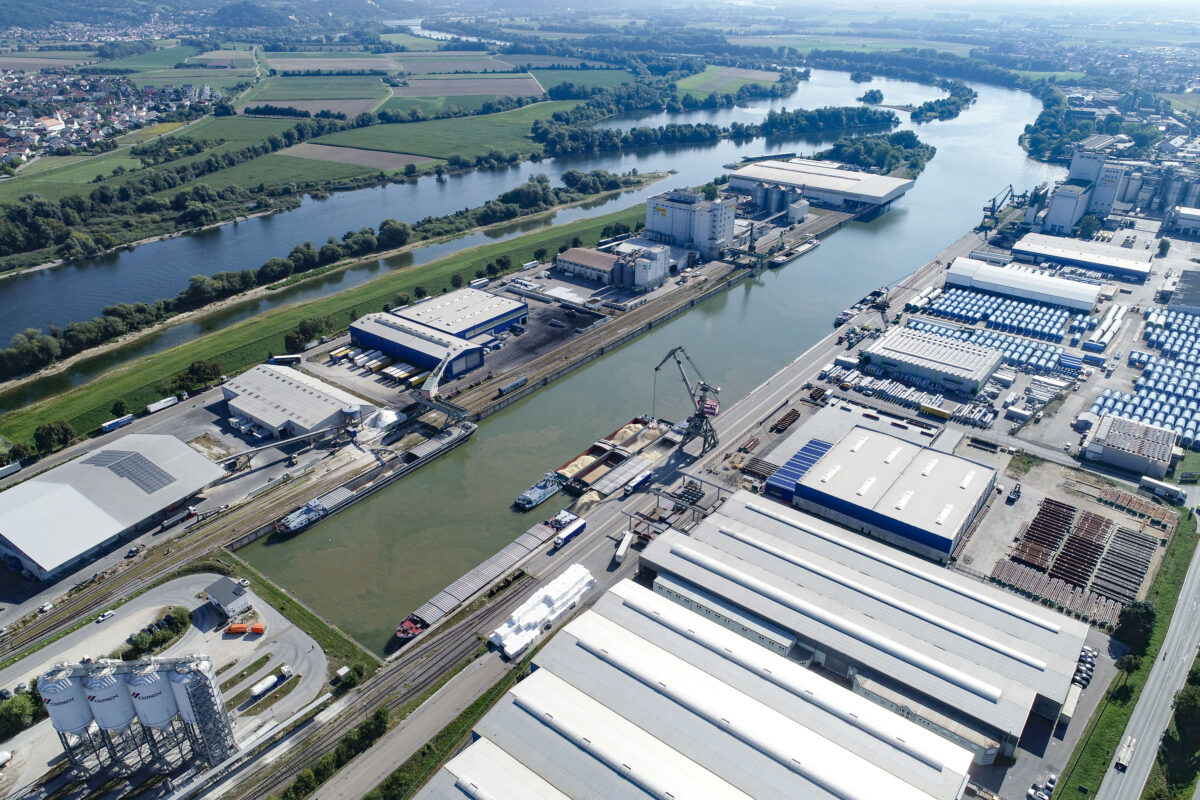
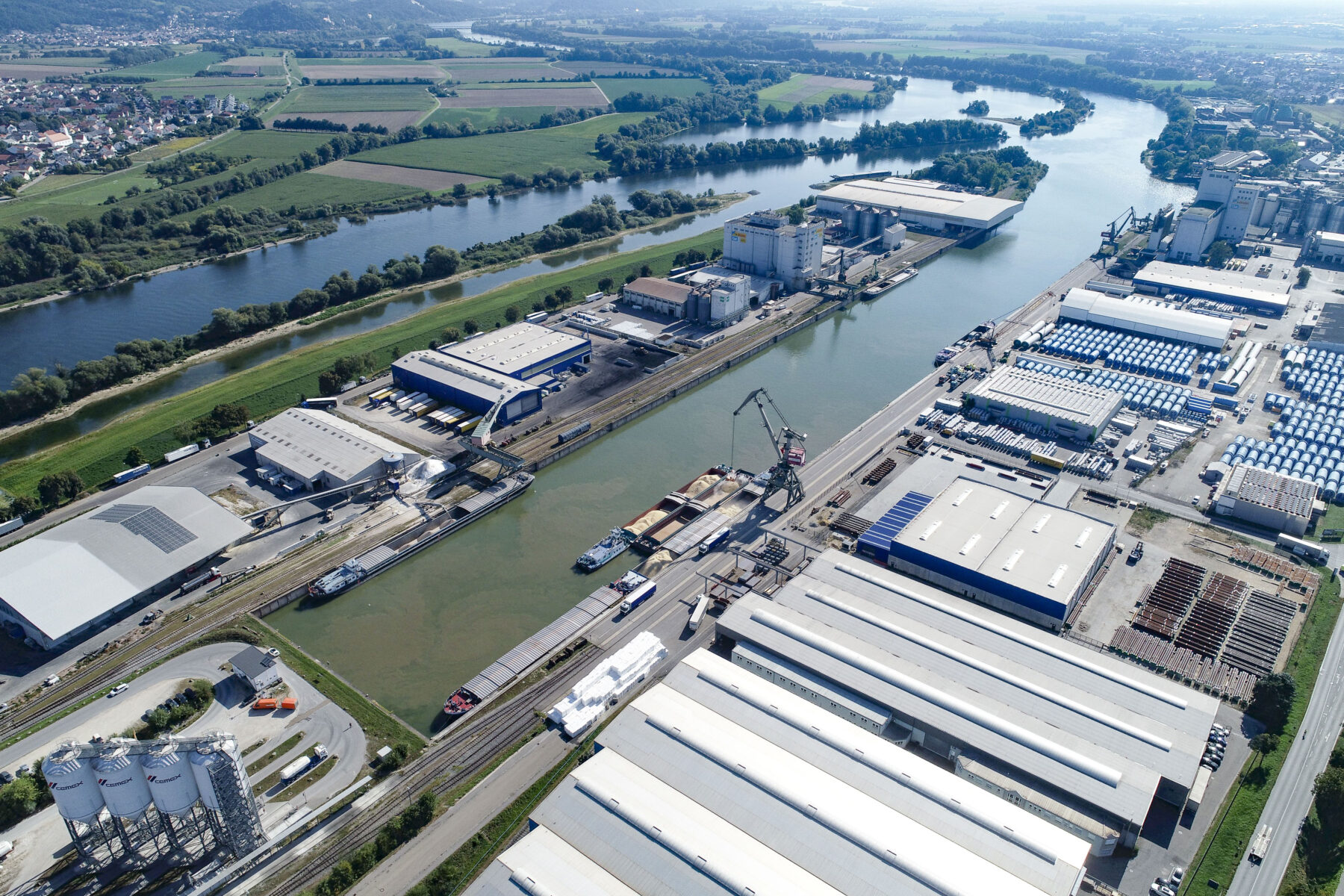
The combined rail and water freight handled by bayernhafen reached 8.37 million tonnes in 2025. Around 487,000 road trips were saved by shifting long-distance transport to the more environmentally friendly modes of inland waterway and rail (pictured: bayernhafen Regensburg). (Image source: bayernhafen / Michael Ziegler)
Regensburg, 26 February 2026 – In 2025, bayernhafen moved 8.37 million tonnes of freight by inland waterway and rail across its locations in Aschaffenburg, Bamberg, Nuremberg, Roth, Regensburg and Passau (+2.5% compared with 2024). A recent survey highlights the importance of these locations as regional employment hubs: the roughly 400 companies based at the ports employ almost 16,000 people. With the development of a new logistics and industrial park in the Deggendorf region, bayernhafen is also creating additional opportunities for companies to locate there while helping shift cargo and freight to more sustainable modes of transport.
Around 487,000 road trips were avoided in 2025 by shifting long-distance freight transport to the more environmentally friendly modes of ship and rail. Inland waterway freight throughput amounted to 2.19 million tonnes last year, representing an increase of 6% compared with 2024. Rail freight throughput reached 6.19 million tonnes, up 1.4% year-on-year. Combined transport (CT) amounted to 478,680 TEU (one TEU corresponds to a standard 20-foot container), slightly above the previous year’s level (+1%). In addition to containers in seaport hinterland transport, swap bodies and semi-trailers were also handled in continental transport.
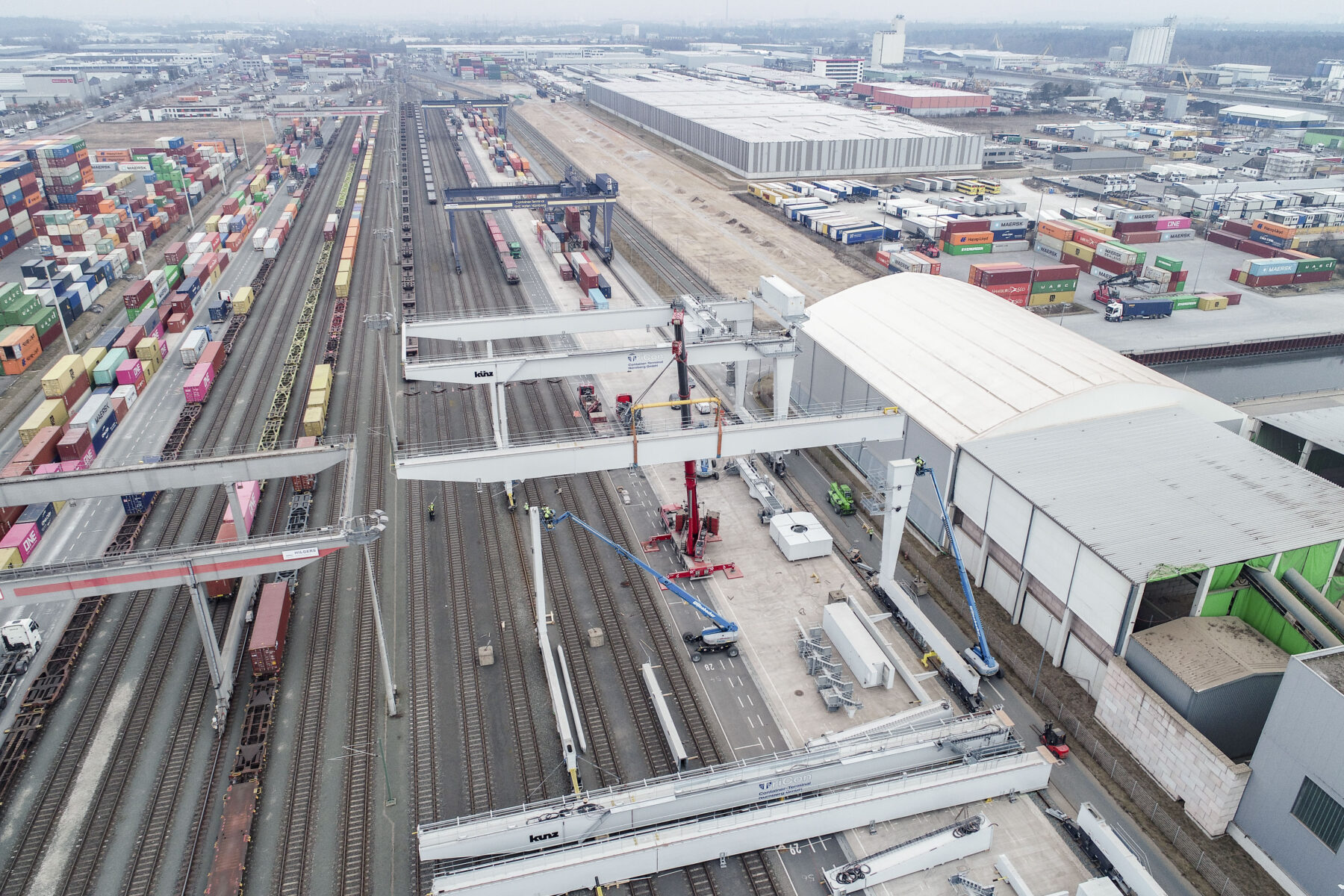
The expansion of the trimodal combined transport terminal at bayernhafen Nürnberg will further enhance combined transport operations. With the terminal remaining fully operational, construction began in early 2026 on three new high-performance crane systems in Module 1. Once completed, crane capacity at the CT terminal, operated by TriCon Container-Terminal Nürnberg GmbH, will increase by approximately 20%. The project is supported by funding from the German Federal Ministry for Digital and Transport.
bayernhafen expands its presence
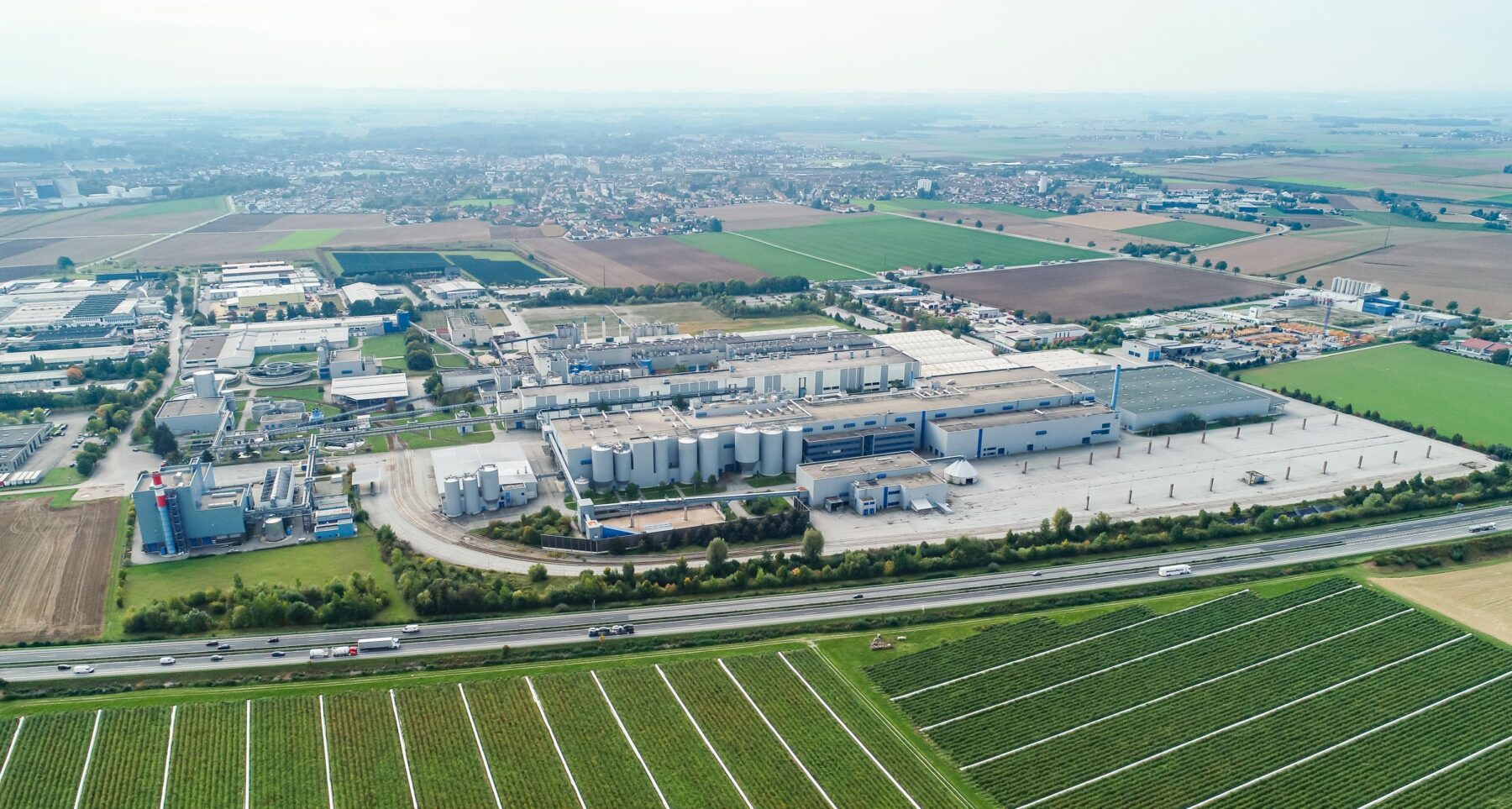
In October, bayernhafen acquired a 52-hectare site of a former paper mill in the Deggendorf region with the goal of developing a new logistics and industrial park. The ‘bayernhafen InfraPark Plattling-Stephansposching’, the first site without direct access to a waterway, represents a logical step in the company’s expansion: “Rail transport has always played an important role since bayernhafen was founded 100 years ago. Thanks to its connection to the rail network and its transhipment infrastructure, the new site is ideally suited to shifting more freight from road to rail,” says Joachim Zimmermann, the Chief Executive Officer of bayernhafen.
At the new location, bayernhafen provides local, national and international customers and partners from industry, the circular economy, transport and logistics with opportunities both to shift freight flows and to establish new operations. The redevelopment of the former industrial site creates large-scale possibilities for companies without requiring additional land. The site also offers substantial capacity to accommodate a variety of energy solutions.
Driver of employment and regional development
bayernhafen celebrated its 100th anniversary in 2025. A recent survey highlights the positive development in employment at the company’s port locations. Around 400 companies are currently based at these locations, together employing nearly 16,000 people. This represents an increase of 22.7% since the previous survey in 2016 and underlines the ports’ importance as regional drivers of employment.
Two examples demonstrate how the ports help secure local jobs and keep industrial production in the region, particularly in the mechanical and plant engineering sectors. Siemens Energy uses bayernhafen Nürnberg to load transformers manufactured at its Nuremberg plant onto inland vessels. Meanwhile, bayernhafen Passau serves as the global gateway for large-scale systems produced by Linde Engineering at its Tacherting facility.
Instead of looking at individual modes of transport in isolation, we need an integrated, multimodal transport strategy.
Joachim Zimmermann
Chief Executive Officer of bayernhafen
Investments and outlook
The discontinuation of trailer rail services at the end of 2025, which had operated successfully between Regensburg and Hungary for nearly two years, will be reflected in upcoming transport figures. “To move large trailer volumes in continental transport onto rail sustainably, we would also like to see greater long-term commitment from shippers,” says bayernhafen’s Chief Executive Officer, Joachim Zimmermann. “Container transport in seaport hinterland traffic shows how this can succeed over the long term. The necessary infrastructure and capacity are already in place at bayernhafen’s locations.” The completion of the major renovation works on the Regensburg–Nuremberg and Regensburg–Passau railway lines later this year is expected to deliver a major boost to the reliability and performance of the rail network. In the meantime, however, bayernhafen and its port customers anticipate significant disruption due to full line closures and diversion routes.
“Lessons must be learned from past mistakes. To prevent an unmanageable maintenance backlog on inland waterways – an environmentally friendly mode of transport – they need adequate, forward-looking funding. Instead of looking at individual modes of transport in isolation, we need an integrated, multimodal transport strategy,” says Joachim Zimmermann, Chief Executive Officer of bayernhafen and President of the German Inland Ports Association (Bundesverband Öffentlicher Binnenhäfen e.V.). “As logistics hubs, ports efficiently link road, rail and inland waterway transport, enabling sustainable logistics chains. This requires a well-functioning transport infrastructure.”
On 13 September 2026, bayernhafen Passau will play host to a major port festival. Together with port customers and partners, bayernhafen aims to offer interested members of the public an insight into the diverse and fascinating world of logistics.